
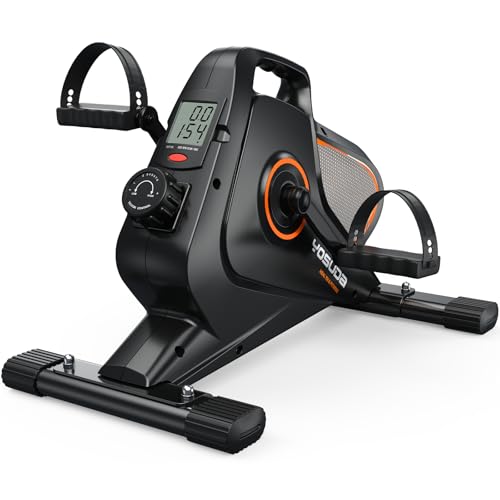
Finding ways to incorporate more movement into your daily routine can be a challenge, especially if you spend long hours at a desk. One popular solution is to use an under-desk bike, which allows you to pedal away while you work. Two well-known options in this category are the YOSUDA Under Desk Bike Pedal Exerciser and the DeskCycle MagneTrainer-ER Mini Exercise Bike. In this guide, I’ll share my insights on both products, comparing their design, performance, and overall value to help you make an informed decision.
|
|
|
|
$159.99
|
$179.99
|
When it comes to under-desk bikes, design and build quality are paramount. In my experience, the YOSUDA Under Desk Bike Pedal Exerciser has a sleek and compact design that fits well under most desks, making it a convenient choice for office environments and home workspaces alike. Weighing around 24 pounds, it feels sturdy and stable during use, providing a sense of security as you pedal. The frame is constructed from durable materials that withstand regular use, ensuring longevity. The pedals are large and textured, which adds a layer of safety as you cycle, preventing your feet from slipping even during intense sessions. Additionally, the adjustable resistance feature is easy to set and allows you to customize your workout intensity, making it suitable for users of varying fitness levels.
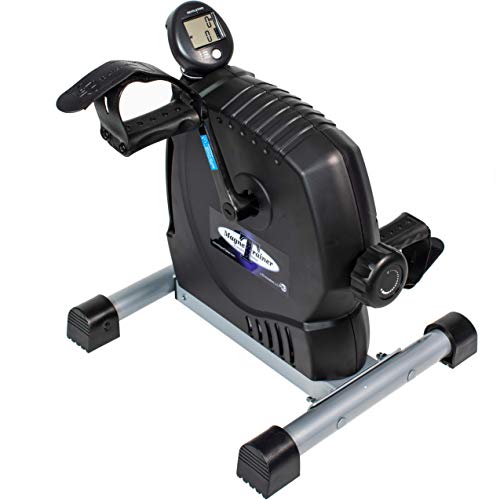
On the other hand, the DeskCycle MagneTrainer-ER Mini Exercise Bike has a slightly bulkier build but is designed for comfort and usability. Its ergonomic pedals can accommodate a variety of foot sizes, and the adjustable pedal straps help secure your feet, enhancing the overall cycling experience. The MagneTrainer-ER is also equipped with a more advanced magnetic resistance system, which I found to provide a smoother pedaling experience compared to traditional friction-based systems. This design choice may be significant for those looking for quiet workouts, as it tends to operate more quietly than the YOSUDA, making it ideal for shared workspaces or environments where noise could be a distraction. Furthermore, the overall aesthetic of the DeskCycle is modern and appealing, which could complement your workspace decor.
Performance is where these two bikes really begin to show their differences. The YOSUDA offers a decent range of resistance levels, making it suitable for both beginners and those looking for more intensity in their workouts. The simple LCD monitor displays your workout time, distance, calories burned, and RPM, which I found helpful for tracking my progress throughout the day. The display is easy to read and provides instant feedback, which can be motivating as you aim to achieve your fitness goals.
Conversely, the DeskCycle MagneTrainer-ER shines in terms of performance features. The magnetic resistance system allows for a greater range of resistance levels, which can be adjusted more precisely than on the YOSUDA. This feature is great if you want to gradually increase your workout difficulty over time, as it allows for a more tailored exercise experience. The LCD display is also more advanced, offering additional metrics like speed and total distance, which adds to its appeal for tech-savvy users who appreciate detailed tracking of their fitness activities. Furthermore, the DeskCycle’s ability to accommodate a wider range of resistance levels means that it can grow with you as your fitness level improves, making it a long-term investment.
When weighing your options, it’s essential to look at the pros and cons of each model.
For the YOSUDA Under Desk Bike Pedal Exerciser, one of the biggest advantages is its affordability. It’s a great entry-level option for those new to under-desk bikes, providing a straightforward way to integrate more movement into your day without breaking the bank. However, some users have noted that the resistance can feel less smooth compared to the MagneTrainer-ER, especially at higher levels, which may be a consideration for those who prioritize a seamless pedaling experience. Additionally, while the YOSUDA is compact, its design might not support users who are taller or have longer legs, as the pedal height may not be adjustable.
The DeskCycle MagneTrainer-ER has a more advanced resistance system and a more substantial build quality, which many users appreciate. Its design is more ergonomic, catering to users who may spend longer periods cycling. However, it comes at a higher price point, which may deter some budget-conscious buyers. Additionally, its larger size may not fit under every desk as seamlessly as the YOSUDA, particularly in tighter office spaces. Users should consider their available workspace before making a decision, as the dimensions of the MagneTrainer-ER can limit its placement.
Choosing between these two bikes largely depends on your needs and how you plan to use them. If you’re just starting out and want something straightforward to help you get moving while you work, the YOSUDA Under Desk Bike is an excellent choice. It’s user-friendly, compact, and budget-friendly, making it a great option for casual users. This bike is particularly suited for individuals who may not be as serious about their fitness routine but want to incorporate more activity into their day-to-day life.
On the other hand, if you’re serious about integrating more rigorous exercise into your daily routine or if you’re someone who prefers a smoother and quieter ride, the DeskCycle MagneTrainer-ER is worth the investment. Its advanced features and superior build quality justify the higher price for many users who prioritize performance. This option is ideal for fitness enthusiasts or those who may want to use the bike for longer sessions, as it offers a more comfortable and effective workout experience.
Both the YOSUDA Under Desk Bike Pedal Exerciser and the DeskCycle MagneTrainer-ER Mini Exercise Bike are solid options, but they cater to different types of users. If you’re looking for a more affordable and straightforward bike, go with the YOSUDA. However, if you want a more advanced and durable bike that offers a smoother experience, the DeskCycle MagneTrainer-ER is the better choice. Ultimately, the decision should be based on your specific needs, budget, and how you envision using the bike in your daily routine.
|
|
|
|
$159.99
|
$179.99
|
Both bikes are relatively quiet, but the DeskCycle MagneTrainer-ER is quieter due to its magnetic resistance system. The YOSUDA may produce slightly more noise, especially at higher resistance levels, which could be a consideration if you work in a shared space or need to minimize distractions.
While both bikes are designed for use under a desk, they can technically be used while sitting on a chair or couch. However, the height of your seating may limit your pedaling motion, making it less effective for exercise compared to using them under a desk where you can achieve a full range of motion.
Yes, both bikes have weight limits. The YOSUDA typically supports up to 240 pounds, while the DeskCycle MagneTrainer-ER has a weight limit of around 300 pounds. Always check the specific model for accurate limits to ensure safe usage.
Both bikes come mostly assembled. You’ll likely just need to attach the pedals and set up the display. It usually takes about 15-30 minutes, making it a convenient option for those who may not want to spend a lot of time on assembly.
Neither the YOSUDA nor the DeskCycle MagneTrainer-ER offers Bluetooth connectivity or app integration. They focus on providing a straightforward, no-frills exercise experience without the need for additional technology. This simplicity can be appealing for users who prefer to focus solely on their workout without the distractions of technology.